


Eco Beauty Score Environmental Impact
Biotherm joined the EcoBeautyScore Association, a global initiative that has brought together over 70 cosmetics companies & associations to help consumers make more informed choices. Thanks to an environmental impact assessment - that is science-based and independently verified - we are able to share with you the environmental performance of your favourite Biotherm products.
What does it mean? The EcoBeautyScore compares a product's environmental impact against others in its category (e.g., face care). The score is based on a market sample representing the diversity of formulas and packaging sold in Europe.
Products that score "A" rank in the top 10% of this sample, while those scoring "E" rank in the bottom 10%
Our product safety is systematically assessed whatever their environmental impact score.
How does it work?
This score has been calculated measuring the full impact of a product over its lifetime, from sourcing the ingredients and the packaging, to manufacturing, transport, consumer usage and even after use when it becomes waste.

The different planetary impacts – such as climate, water, and biodiversity – are calculated for each stage of the product’s life and combined. This is the approach most commonly used by scientists to measure the environmental impact of a product.

The methodology has been co-designed by scientists and reviewed externally by a panel of independent experts1. Score usage is regularly audited by a third party. To find out more about the methodology, click here.
1The EBS methodology and platform have been reviewed and verified by E&H, the consulting branch of the Ecocert group, to ensure compliance with the principles of the European Commission’s PEF methodology and ISO norms 14020/14025.

[ Discover our best in class ]
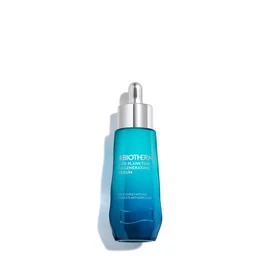
![Force Supreme Blue Serum [LP-XR]](https://www.biotherm.fr/dw/image/v2/BDCR_PRD/on/demandware.static/-/Sites-biotherm-master-flaghsip-catalog/default/dwe5d885ca/images/men-care/forcesupreme/BIO2121/Bio_skme_forcesupreme_Blue-Serum-LPXR_60ml_3614274131826_2023_dmi_Packshot.webp?sw=270&sfrm=jpg&q=85)
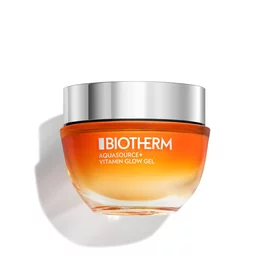
Aquasource+ Vitamin Glow Gel
The first vitamin drink for your skin with 2500mg of Vitamins in a jar for a brighter skin in just two weeks (Clinical scorage on 44 subjects after 14 days of use).
